
Your colleague resigns.
Your manager asks you to cover some of the person's responsibilities while the company finds a replacement.
Three months later, the replacement has not arrived. You are attending additional meetings, managing more projects and answering questions that previously went to someone else.
Your job title hasn't changed.
Neither has your paycheck.
This is where professional development can quietly become a compensation problem.
The Difference Between Helping and Doing Another Job
Taking on unfamiliar responsibilities is often an important part of career development.
Employees can demonstrate leadership, build technical capabilities and establish that they are ready for promotion by accepting challenging assignments.
But there is a difference between a temporary stretch assignment and a permanent expansion of a position.
The distinction becomes especially important when additional responsibilities involve decision-making authority, management of other employees, financial accountability or specialized expertise.
If these duties become a routine part of the job, employees have a reasonable basis for asking whether their title and compensation still reflect their actual responsibilities.
The Department of Labor's guidance on overtime exemptions also emphasizes that job titles alone do not determine exempt status. Actual duties and applicable compensation requirements matter.
That does not mean additional responsibilities automatically create a legal entitlement to a raise.
It does mean employers and employees should understand what the job has become.
Calculate the Value of the Additional Work
Suppose an employee earns $60,000 annually and ordinarily works 40 hours a week.
The employee begins working 45 hours per week to accommodate additional responsibilities, with no compensation change.
Using a simplified 52-week calculation:
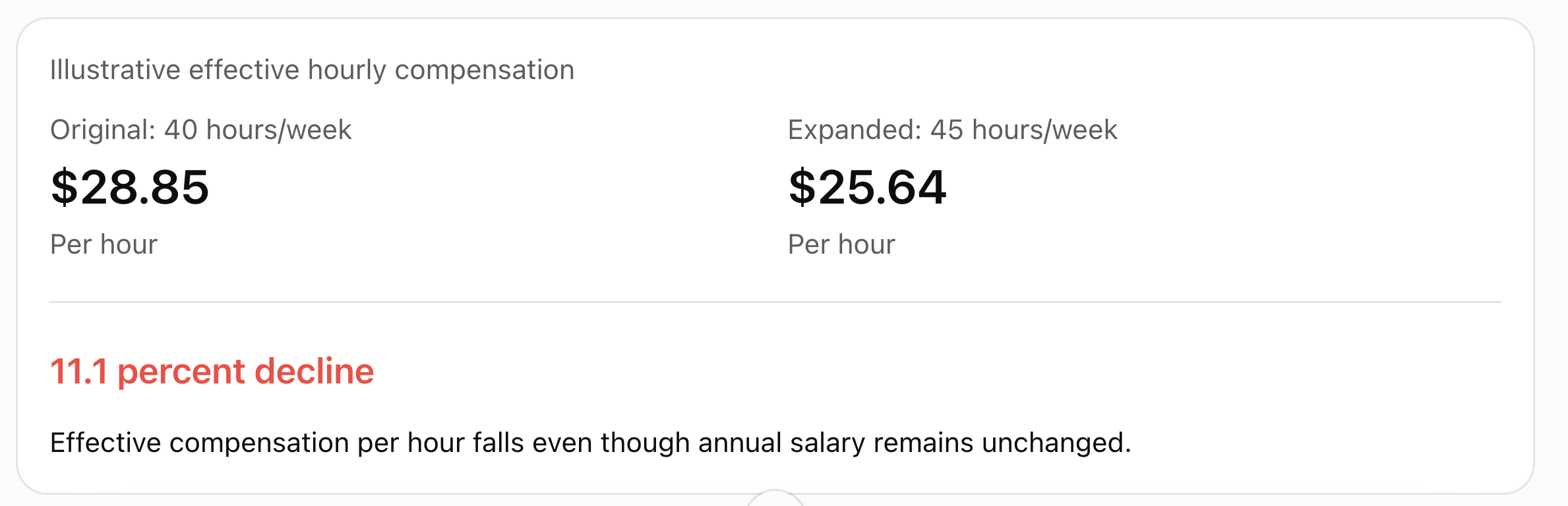
This example does not account for paid leave, bonuses or legally required overtime. It illustrates how increased working time can reduce the economic value of a fixed salary.
Employees who take on additional responsibilities without working longer hours may have a different concern: the market value of their expanded role.
Both situations warrant examination.
Document the Job You Are Actually Performing
Employees should avoid entering compensation conversations with only a general complaint about workload.
Instead, establish what has changed.
Compare the original job description with current duties. Record additional projects, decisions, direct reports and measurable outcomes.
Determine whether the expanded responsibilities resemble another position within the organization.
The BLS Occupational Employment and Wage Statistics program provides occupational wage estimates that can support external benchmarking, although its figures should not be treated as exact salary prescriptions for individual positions.
Current job postings for comparable roles can provide additional context.
This evidence helps turn a vague request for recognition into a specific discussion about alignment between responsibilities and compensation.
Ask for a Decision, Not Just Recognition
The next conversation should address four practical questions: Are the additional responsibilities permanent? Is the position being reevaluated? What compensation or title adjustment is available? When will a decision be made?
Employees can acknowledge the professional opportunity while establishing that an indefinite arrangement is not sustainable.
Employers may face genuine budget constraints or promotion-cycle limitations.
A useful response, however, should provide something more concrete than an open-ended promise to revisit the matter.
That could involve a temporary responsibility allowance, a planned promotion review, adjusted workload or a documented timeline for making a compensation decision.
What Employers Need to Understand
Organizations sometimes rely on their most capable employees to absorb work because those employees are dependable.
The immediate operational benefit can conceal a longer-term retention risk.
An employee who demonstrates the ability to perform more valuable work may eventually recognize that another employer is willing to pay for those capabilities.
At that point, the company faces both the original staffing gap and the possible loss of the person who was helping cover it.
Why this matters
Employees should welcome genuine opportunities to develop new capabilities, but professional growth should come with clarity about expectations and future rewards.
Employers should treat sustained increases in responsibility as a workforce-planning decision, not an invisible source of free capacity.
Career signal: If your responsibilities have permanently changed, your compensation conversation should change too.
CTA: Compare your current responsibilities with your original job description. Identify three meaningful changes and request a formal role review before year-end compensation decisions are finalized.
How StrikeForce can help: StrikeForce can support professionals evaluating opportunities appropriate to their actual experience and help employers define positions accurately before recruiting.