
By Michael Stephenson, President and CEO of StrikeForce Staffing
Something interesting is happening in manufacturing.
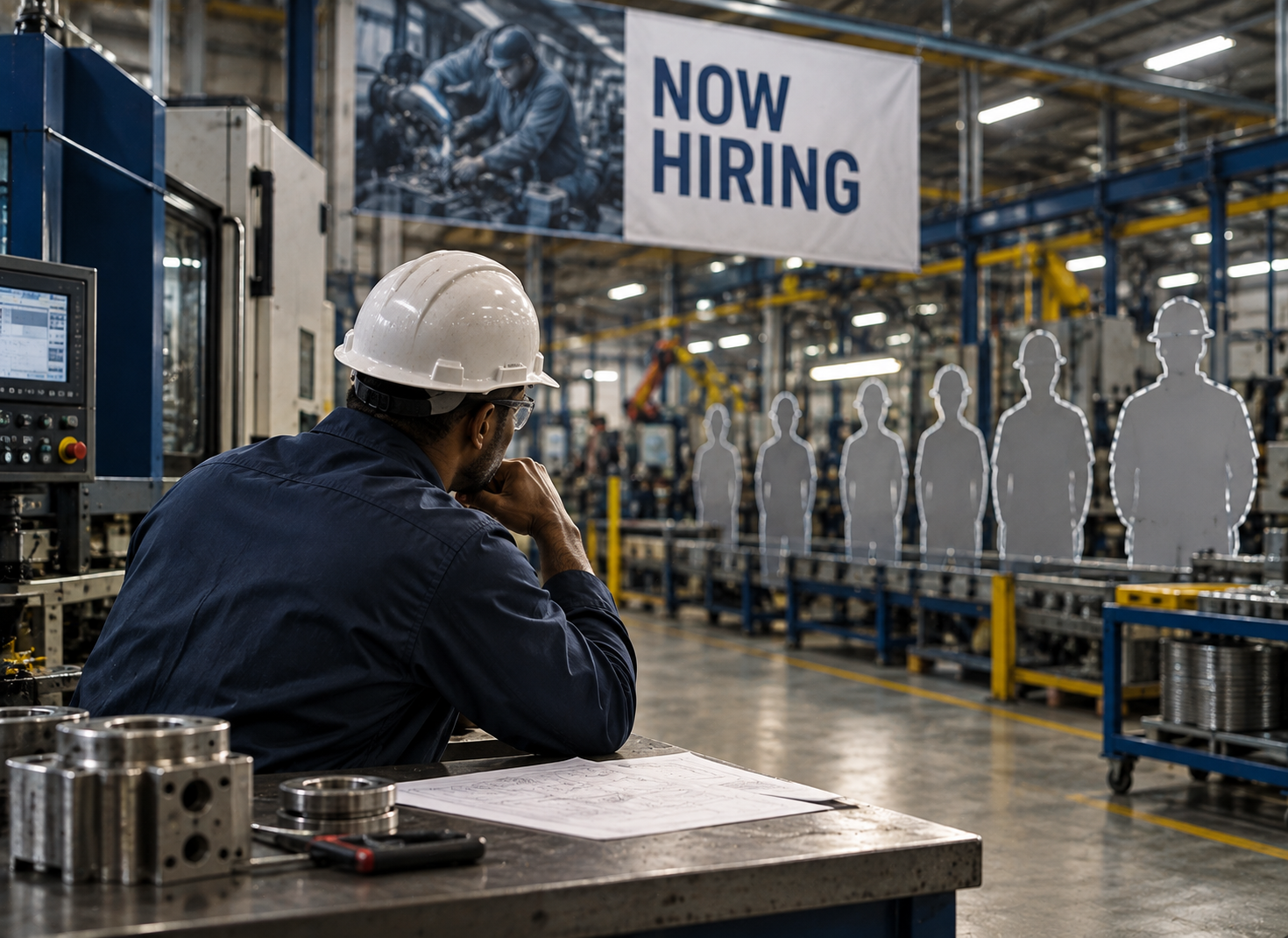
Employers appear to want more workers, but that demand isn't translating into completed hires.
New ICIMS workforce data show manufacturing job openings were 29 percent higher in July than a year earlier. Applications increased too, by 17 percent. Yet actual manufacturing hires were essentially flat. Across industries, openings were 17 percent higher while hiring remained unchanged.
Indeed's August labor-market data reinforce the trend: production and manufacturing postings have risen about 8 percent over the past year, even while overall U.S. job-posting activity remains relatively subdued.
That raises an important question for employers:
If people are applying and positions are open, where is the hiring process breaking down?
The answer could be skills mismatches, compensation, slow interview processes, unrealistic requirements, candidate drop-off, or simply employers being more hesitant about making the final hiring decision.
Whatever the cause, posting more jobs isn't necessarily solving the problem.
Why This Matters
Companies often diagnose an unfilled position as a sourcing problem: We need more candidates.
But if applications are increasing while hires aren't, the constraint may be somewhere else in the recruiting funnel.
For manufacturers already competing for technicians, operators, maintenance workers and other specialized talent, that distinction matters.
Hiring Signal
The next recruiting advantage may come from improving conversion, not generating more applicants.
CTA
Take your five hardest-to-fill positions and measure
Applicants → Qualified Applicants → Interviews → Offers → Acceptances → Starts
Where does the biggest percentage disappear?
That's probably where your recruiting problem actually lives. Do a consultation with Strike Force to help you solve this recruiting problem.