By Michael Stephenson, President and CEO of StrikeForce Staffing
America's factories are adding workers again. But employers hoping for a return to the traditional manufacturing workforce may be looking for people who no longer match the jobs being created.
U.S. manufacturers have added approximately 72,000 employees since December, according to an October 26 report in The Wall Street Journal. The catch is that many of these positions require technical expertise, advanced training or engineering qualifications.
Manufacturing employment may be recovering, but the workforce is changing. Employers increasingly need people who can maintain automated equipment, interpret production data and solve technical problems, not simply operate machinery.
That shift creates a recruiting challenge for manufacturers that continue relying on traditional job descriptions and qualifications.
The Factory Floor Has Changed
Manufacturing has been undergoing a fundamental transformation for years.
Between 2015 and 2025, manufacturers eliminated approximately 244,000 production positions while adding 358,000 management, business and financial operations jobs, according to Labor Department figures cited by The Wall Street Journal.
The shift reflects several forces, including automation and the increasing complexity of modern production.
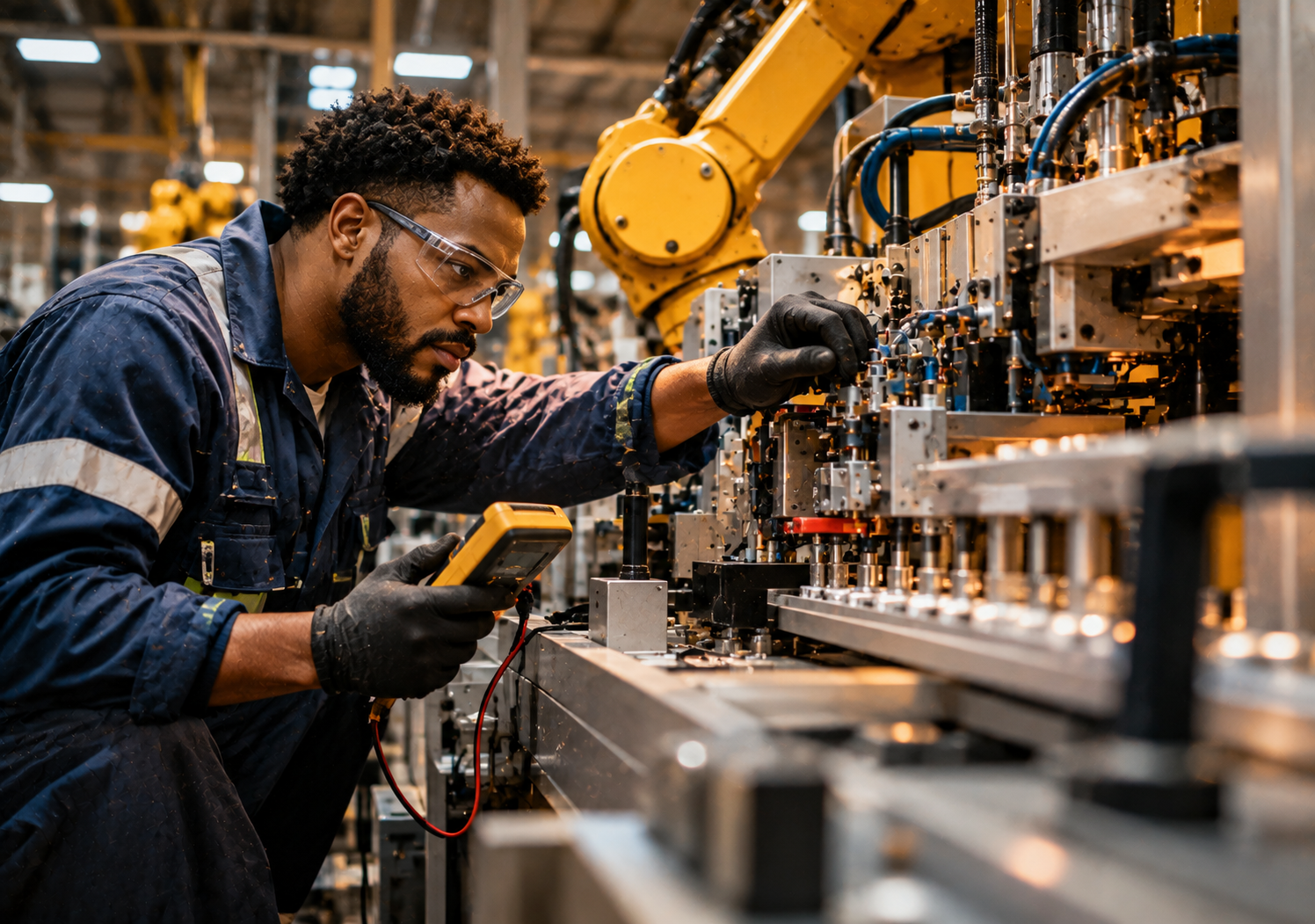
Today's factories rely on sophisticated equipment, sensors and computerized systems. When those systems malfunction, employers need workers who can diagnose problems and restore operations.
A machine operator may need to understand computerized controls. A maintenance technician may need experience with robotics. An equipment specialist may need to interpret data to identify potential failures.
The result is a different definition of a qualified manufacturing employee.
The Hiring Problem Isn't Always a Worker Shortage
Consider a manufacturer looking for an experienced maintenance technician.
Its job advertisement requires five years of experience operating a particular production system.
But nearby employers may be recruiting workers with similar mechanical and electrical capabilities from different industrial environments.
A candidate who has maintained automated equipment in another sector might be capable of learning the manufacturer's system.
Yet the company could reject that person because the résumé doesn't match its narrow experience requirements.
This is where the hiring challenge becomes more complicated.
Some employers genuinely need highly specialized expertise. Others may be treating skills that can be learned as mandatory qualifications.
The difference affects how quickly positions can be filled.
What Are Manufacturers Doing Differently?
The Wall Street Journal highlighted Swift Coat, a Phoenix company producing specialized coatings used in applications including satellite technology.
Its highly automated manufacturing processes require employees with advanced technical capabilities.
The company expects a new automated production line to change its staffing requirements. Instead of hiring five technicians, it may need one technician and two engineers.
That doesn't necessarily mean spending less on employees.
It means spending differently.
Other manufacturers are working with educational institutions to develop specialized training programs.
Arizona State University, for example, is preparing equipment technicians for semiconductor manufacturing operations in Arizona.
These partnerships reflect an important recognition: Employers cannot always expect the existing labor market to supply workers with every emerging technical capability.
Sometimes the workforce must be developed alongside the technology.
Three Questions Employers Should Ask
Before posting another manufacturing vacancy, hiring managers should reconsider how the position is defined.
First, which capabilities are genuinely essential on day one?
Separate safety-critical qualifications and specialized expertise from skills that can be developed through structured training.
Second, could an existing employee learn the new responsibilities?
Internal workers already understand the organization's equipment, culture and operating environment. Additional technical instruction may allow them to assume more advanced positions.
Third, are recruiting requirements unnecessarily restrictive?
An engineering degree may be essential for certain positions. But some technician roles may be accessible through associate degrees, apprenticeships or demonstrated technical experience.
Employers should evaluate the actual responsibilities rather than assuming every increasingly technical position requires the same educational background.
Why This Matters
Manufacturing's employment recovery presents an opportunity, but it also exposes a workforce planning problem.
Factories are becoming more technologically sophisticated faster than some recruiting systems are adapting.
Employers that define jobs too narrowly may struggle to fill positions even when capable workers are available.
The companies that succeed will understand which skills they must hire, which they can develop and how those decisions affect production costs.
Hiring Signal
The skills required to operate a factory are changing. Your recruiting requirements should change with them.
What Employers Should Do Now
Review your three hardest-to-fill technical positions.
Identify the qualifications that are absolutely necessary and those that could be developed through training.
Then determine whether your existing employees or candidates from adjacent technical fields could qualify.
How StrikeForce Can Help
StrikeForce helps manufacturers and industrial employers identify qualified technical professionals and evaluate recruiting strategies for hard-to-fill positions. By focusing on practical capabilities and operational requirements, employers can build stronger talent pipelines without unnecessarily narrowing their candidate pools.