
Companies Are Measuring AI Use, But Not Whether Employees Are Using It Well

Many employers can now tell how many workers have access to AI and how frequently those tools are being used. Far fewer can determine whether that usage is producing better decisions, stronger work or meaningful productivity gains.

AI adoption is rising quickly. Gallup found that 52 percent of U.S. employees now use AI in their jobs, while 47 percent say their organization has formally integrated AI tools. Yet adoption alone does not guarantee transformation. Among employees at organizations that have implemented AI, 65 percent say it has improved their individual productivity, but only 12 percent strongly agree that it has fundamentally changed how work gets done across the organization.

This reveals an important gap between AI activity and AI capability.

An employee may use an AI assistant every day without knowing how to verify its output, protect sensitive information or redesign a workflow around it. SHRM found that 41 percent of workers use AI at work, while many users characterize at least some of the resulting output as low quality.

The next phase of workplace AI will therefore require more than licenses and usage dashboards. Employers will need to define what competent AI use looks like in each role and measure whether it improves speed, accuracy, quality or customer outcomes.

Why This Matters

High usage can create the appearance of progress while concealing poor practices, duplicated work and unreliable output.

Organizations that measure business outcomes, not merely tool adoption, will be better positioned to understand whether their AI investments are working.

AI Signal

The important question is no longer whether employees use AI. It is whether they use it competently.

CTA

Choose one recurring workflow in each department and establish a simple before-and-after comparison:

  • Time required to complete the work

  • Accuracy or error rate

  • Quality of the final output

  • Amount of human review required

  • Value delivered to the customer or organization

This will provide a clearer picture of AI capability than an adoption dashboard alone.

Frontline Hiring May Be Recovering Before the Rest of the Labor Market

By Michael Stephenson, President and CEO of StrikeForce Staffing

The first meaningful signs of a hiring recovery may not appear in corporate offices. They may emerge in warehouses, production facilities, logistics operations and other frontline workplaces.

Recent staffing-industry data show improving demand for operational and temporary workers, while professional hiring remains comparatively weak. Randstad reported that its U.S. operational business grew substantially during the second quarter, even as professional staffing revenue declined. The company views temporary and blue-collar hiring as an early indicator because businesses often add flexible labor before committing to permanent positions.

Other hiring data point in the same direction. Employers are concentrating recruitment around roles directly connected to patient care, production and frontline operations. ICIMS reported that job openings among its U.S. customers were up 19% year over year, while actual hiring remained relatively flat—suggesting that employers have demand but are struggling to convert that demand into completed hires.

This does not mean a broad hiring boom has arrived. The labor market remains cautious, with national hiring, quitting and layoffs all relatively subdued. But companies appear increasingly willing to hire where staffing shortages directly affect revenue, production or service delivery.

Why This Matters

Employers may be entering a more selective recovery in which hiring budgets are released first for roles tied directly to business operations.

That creates an advantage for companies that identify their most business-critical positions before competitors begin recruiting aggressively again.

Hiring Signal

Operational and temporary hiring may be leading indicators of a broader labor-market recovery.

CTA

Review the positions your organization expects to need during the next six months.

Do not wait until those roles become urgent. Begin identifying candidates, reconnecting with former applicants and strengthening relationships with workforce partners now.

Connect with us at StrikeForce to navigate this version of the labor market.

Employees Don't Leave Companies Overnight, They Leave One Frustration at a Time

Most resignations are not the result of a single bad day. More often, employees leave after months of accumulated frustrations: unclear communication, limited career growth, inconsistent management, heavy workloads, or feeling that their contributions are overlooked.

By the time an employee submits a resignation, the decision has often been forming for weeks or even months.

Organizations that excel at retention don't wait for exit interviews to learn what went wrong. They conduct regular "stay interviews," encourage honest conversations with managers, and identify potential issues before employees begin looking elsewhere.

Why This Matters

Replacing experienced employees is expensive—not only because of recruiting costs but also because of lost institutional knowledge and reduced team productivity.

Retention strategies are often far more cost-effective than continuous hiring.

Hiring Signal

Retention is increasingly driven by manager effectiveness and career development—not compensation alone.

CTA

This month, schedule a 20-minute stay interview with one high-performing employee. Ask:

  • What keeps you here?

  • What frustrates you?

  • What would make your job more fulfilling?

  • What might cause you to consider another opportunity?

Those conversations may be your most valuable retention strategy. Ask StrikeForce to assist in this strategy.

The Next AI Advantage Won't Come From Better Tools, It Will Come From Better Managers

Most organizations have already introduced AI tools into the workplace. The next competitive advantage will not come from buying another AI platform, it will come from how effectively managers help employees use the tools they already have.

Many companies are discovering that adoption stalls because employees aren't sure when AI should be used, how to verify results, or where it fits into existing workflows. Teams with managers who actively coach AI adoption are seeing stronger productivity gains than teams simply given access to AI software.

As AI becomes embedded across business functions, leadership, not technology, may become the biggest differentiator.

Why This Matters

AI implementation is increasingly becoming a management challenge rather than an IT project.

Managers who create a culture of experimentation, training, and responsible AI use are likely to unlock more value than those who simply deploy new software.

Hiring Signal

AI leadership is becoming a management competency.

CTA

Challenge every department manager to identify one repetitive process their team could improve with AI over the next 30 days. Start small, measure results, and share successful workflows across the organization. Let StrikeForce assist.

The Strongest Employers Are Hiring for Adaptability, Not Just Experience

By Michael Stephenson, President and CEO of StrikeForce Staffing

The pace of change in today's workplace is forcing employers to rethink what makes a great hire. While technical experience remains important, many hiring managers are placing greater emphasis on adaptability, the ability to learn new systems, embrace new technologies, and solve unfamiliar problems.

This shift is being driven by rapid advances in AI, automation, and evolving customer expectations. Skills that were highly valuable five years ago may need updating today, and the rate of change shows little sign of slowing.

Forward-thinking organizations are adjusting interview questions to identify candidates who demonstrate curiosity, resilience, and continuous learning rather than relying solely on years of experience.

Why This Matters

Experience tells employers where a candidate has been.

Adaptability suggests how well they'll handle where the business is going.

Organizations hiring adaptable employees often build teams that respond more effectively to technological change and market disruption.

Hiring Signal

Learning agility is becoming one of the most valuable hiring traits.

CTA

During your next interview, ask:

"Tell me about a new skill or technology you had to learn quickly. How did you approach it, and what was the outcome?"

That answer may tell you more about future performance than a résumé ever could.

For more interview questions contact StrikeForce

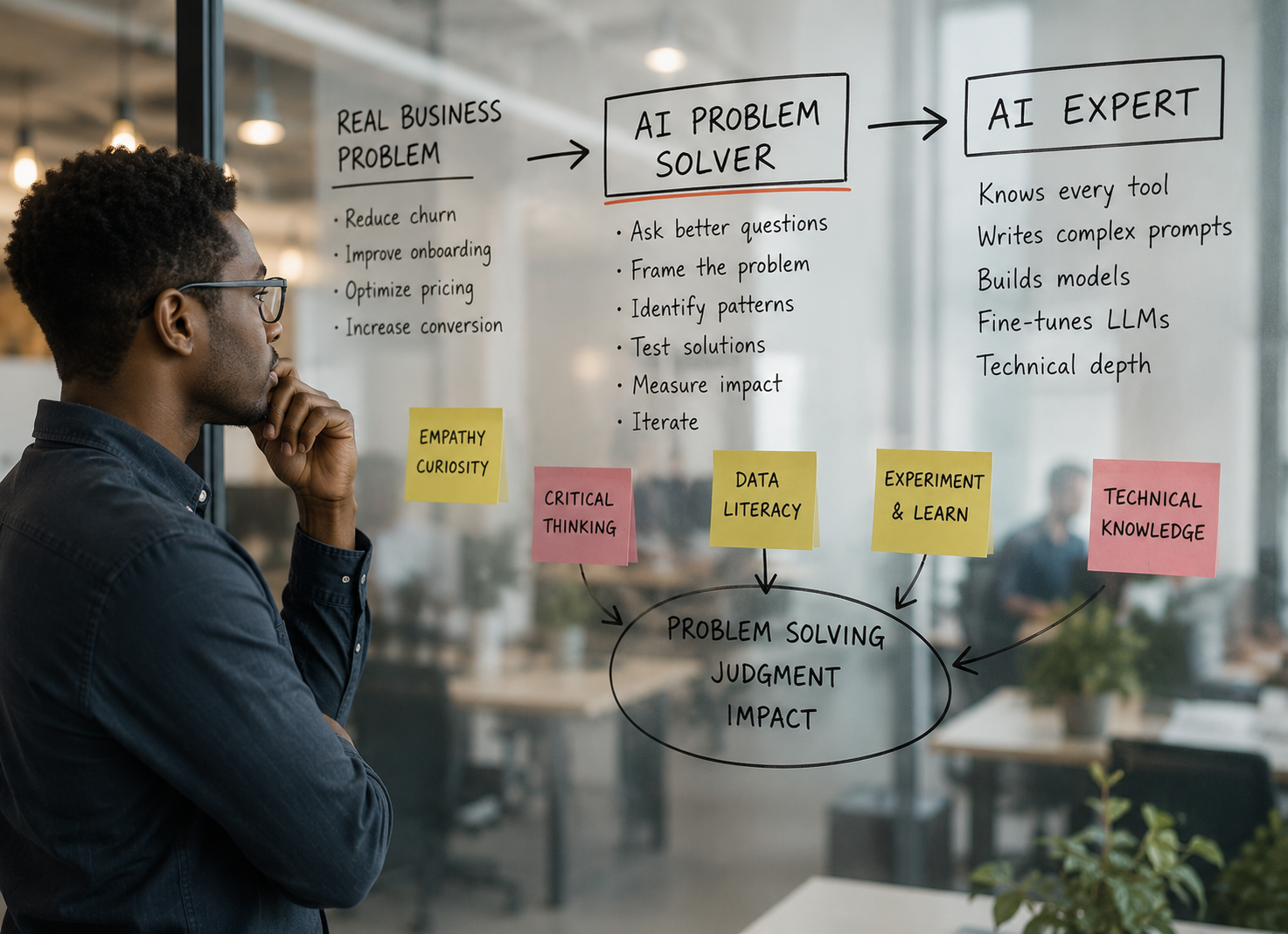
Employers Are Quietly Looking for AI Problem Solvers, Not AI Experts

Many companies have moved beyond asking whether candidates have used ChatGPT or Copilot. Instead, they're beginning to evaluate something more valuable: Can you identify work that AI can improve?

The strongest candidates today aren't necessarily prompt engineers or software developers. They're professionals who understand their business well enough to identify repetitive work, inefficient processes, and manual tasks that AI can automate or accelerate.

Operations managers are streamlining reporting. HR teams are using AI to draft job descriptions and summarize interviews. Sales professionals are automating research before client meetings. Finance teams are reducing hours spent on spreadsheet analysis.

This shift means employers increasingly value candidates who think like process improvers rather than simply tool users.

Why This Matters

AI is becoming less about technology skills and more about business thinking.

The question employers are asking is changing from:

"Can this person use AI?"

to

"Can this person improve how work gets done?"

Hiring Signal

Process improvement is becoming an interview skill.

CTA

During your next interview, be prepared to answer:

"Tell me one process you've improved using technology or AI."

Even a small example can demonstrate initiative and adaptability.

Let StrikeForce help you to prepare for this next phase in your career.

Retention Starts Before Day One: Why Onboarding Is Becoming a Competitive Advantage

In today's hiring market, getting a candidate to accept an offer is only half the battle. Employers are increasingly recognizing that the first 90 days of employment often determine whether a new hire becomes a long-term contributor, or begins looking for the next opportunity.

Research continues to show that structured onboarding improves retention, productivity, and employee engagement. Yet many organizations still treat onboarding as a one-day orientation rather than a strategic process. New employees who receive clear expectations, regular manager check-ins, and role-specific training are significantly more likely to remain with the organization beyond their first year.

This is particularly important in industries experiencing persistent turnover, including logistics, manufacturing, healthcare, and skilled trades, where every early departure increases recruiting costs and places additional pressure on existing teams.

Why This Matters

The cost of replacing an employee often exceeds the cost of onboarding them well. Companies that invest in structured onboarding are reducing turnover while helping new hires become productive more quickly.

Hiring Signal

Retention is becoming a competitive differentiator, and it begins before an employee's first day on the job.

CTA

Evaluate your onboarding process:

  • Does every new employee have a 30-, 60-, and 90-day plan?

  • Are managers actively involved beyond orientation?

  • Are new hires given measurable milestones and regular feedback?

Small improvements during onboarding can have a lasting impact on retention. Let StrikeForce help.

The Hiring Market Is Cooling, But Critical Talent Is Still Hard to Find

By Michael Stephenson, President and CEO of StrikeForce Staffing

The latest U.S. jobs data presents a mixed picture for employers. Overall hiring slowed in June, with employers adding fewer jobs than economists expected, reflecting continued caution around inflation, tariffs, and global uncertainty. Yet despite the softer headline numbers, companies continue to report significant hiring challenges for specialized roles in healthcare, skilled trades, engineering, and technical operations.

This divergence highlights an important shift in the labor market. Employers are no longer competing for every worker, they're competing for workers with the right skills. The result is a labor market where recruiting strategies must become more targeted, with compensation, training, and workforce planning tailored to specific occupations rather than broad hiring assumptions.

Why This Matters

The national jobs report tells only part of the story. Organizations that rely solely on macroeconomic indicators may underestimate the hiring challenges facing critical technical and frontline roles.

Hiring Signal

The labor market is becoming increasingly occupation-specific rather than economy-wide.

CTA

Review your open positions individually. Which roles consistently attract qualified applicants, and which remain difficult to fill despite a slower hiring market? Let StrikeForce help to make sense of it all